
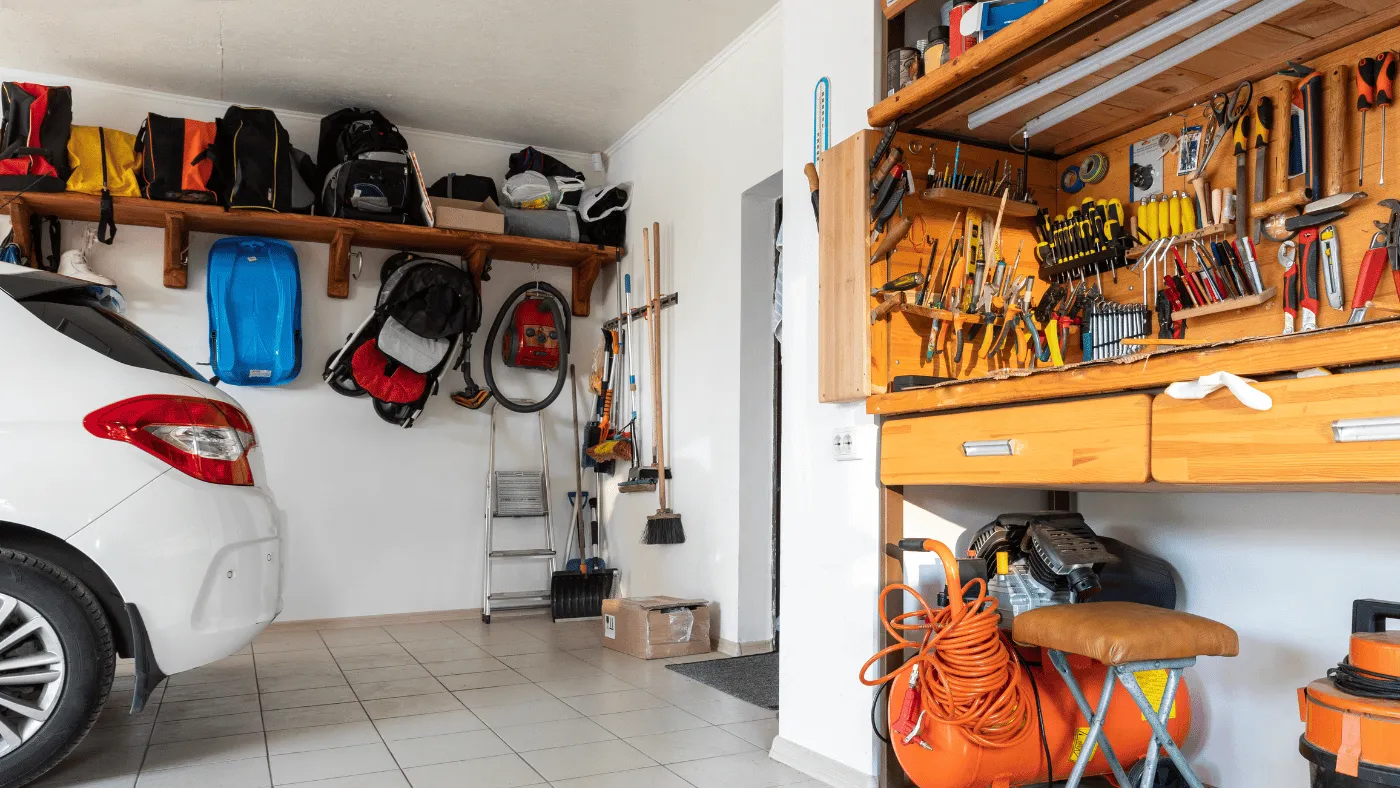
These garage organization tips can help you clear clutter and create more usable space before holiday decorations, seasonal gear, deliveries, and visiting family begin competing for room. With a simple plan, you can make your garage easier to navigate, prepare it for the months ahead, and avoid another last-minute holiday cleanup.
The goal is not to create a picture-perfect garage. It is to make the space easier to use and maintain. Depending on your household, that might mean clearing room for a vehicle, organizing holiday decorations, making seasonal supplies easier to reach, or moving rarely used belongings out of the way.
Use the following garage organization tips to sort what you own, create practical storage zones, and prepare your space before the holiday season gets busy.
Why These Garage Organization Tips Matter Before the Holidays
The garage often becomes the default destination for anything that does not have an obvious place inside the home. Boxes, sports equipment, tools, outdoor supplies, donations, and seasonal decorations gradually begin competing for the same limited space.
The holiday season can add even more to the garage, including decorations, artificial trees, gift-wrapping supplies, incoming packages, extra chairs and folding tables, serving dishes, cold-weather clothing, travel luggage, and donations waiting to leave the house.
Organizing early gives you time to declutter the garage before all of these belongings arrive. It can also prevent you from buying decorations, wrapping supplies, or tools you already own but cannot find.
You do not need to complete the entire project in one exhausting day. Breaking it into smaller areas or categories can make the process easier to finish.
1. Decide How You Need the Garage to Function
Before moving boxes or buying storage products, decide how you need the garage to work during the coming months.
Ask yourself:
Do you want to park a vehicle inside?
Do you need room for holiday deliveries?
Will you use the garage as a project or gift-wrapping area?
Which seasonal items will you need most often?
Are you storing outdoor furniture or summer equipment?
Do you need a clear path to laundry, utilities, or an interior door?
Will guests need access to anything stored there?
Choose two or three priorities before you begin. For example:
Clear enough floor space for one vehicle.
Make holiday decorations easy to reach.
Create a safe, open walkway between the driveway and the house.
These priorities will guide your decisions as you sort. An item may technically fit in the garage, but that does not mean it supports how you need the space to function.
2. Create Sorting Zones Before You Declutter
Do not begin by moving belongings randomly from one side of the garage to the other. Instead, create clear sorting zones.
Use labeled boxes, tarps, or sections of the driveway for:
Keep in the garage
Move elsewhere in the home
Donate
Sell
Recycle
Discard
Decide later
Handle each item once and place it directly into the appropriate category.
Keep the “decide later” group small. Give yourself a deadline to review those belongings before the project ends. Otherwise, that pile may return to the garage without a decision.
Begin with the easiest items to remove, such as empty cardboard boxes, broken tools, damaged decorations, outgrown sports equipment, unwanted furniture, donation items, unused products, and containers with no identifiable contents. Clearing these obvious items first creates more room to sort the belongings that require a decision.
Follow local disposal requirements for paint, batteries, chemicals, electronics, fuel, and other restricted materials.
3. Clear the Floor and Protect Important Walkways
Floor space is one of the most valuable parts of a garage, but it is often the first area to become crowded.
Begin by clearing:
The path between the garage door and the house
Areas around electrical panels and utilities
Vehicle parking areas
Doorways and steps
Frequently used cabinets
Work areas
Access to stored emergency supplies
Once these areas are clear, look for belongings that can be moved onto shelves, wall hooks, racks, or other appropriate storage systems.
Use vertical space carefully. Lightweight seasonal items may work well on higher shelves, while heavy containers should remain lower and easier to lift safely.
Avoid creating unstable towers of mismatched boxes. A few sturdy shelves and consistently sized containers are usually easier to manage than stacks that must be moved every time you need something.
4. Group Similar Items into Defined Zones
One of the most useful garage organization tips is to give every category a defined home.
Useful garage zones may include:
Holiday decorations
Tools and home repairs
Gardening supplies
Automotive supplies
Sports equipment
Camping and outdoor gear
Household overflow
Cleaning supplies
Pet supplies
Luggage
Donations
Bulk household products
Grouping similar belongings prevents one category from spreading across multiple cabinets, shelves, and corners.
For example, keep all holiday decoration storage in one area rather than placing lights above the workbench, ornaments in a cabinet, and wreaths beside the gardening supplies.
A practical system should make it easy to answer two questions:
Where does this item belong?
Can I put it away without moving several other things?
When every category has a clear location, maintaining the garage becomes much easier.
5. Rotate Summer Gear and Prepare Seasonal Garage Storage

Seasonal garage storage works best when current items remain accessible, and off-season belongings move farther back or higher up.
As cooler weather approaches, consider moving these items out of prime storage areas:
Pool toys and floats
Beach chairs
Warm-weather sports equipment
Portable fans
Summer gardening supplies
Outdoor entertaining items
Camping equipment you will not use again soon
Then, bring fall and winter items into easier-to-reach locations:
Holiday decorations
Rain gear
Leaf and yard cleanup tools
Cold-weather sports equipment
Seasonal clothing
Travel supplies
Extra blankets
Winter car supplies
Clean and dry seasonal belongings before storing them. Dirt, moisture, food residue, and plant material can cause odors or damage while items sit unused.
Avoid sealing damp fabric, outdoor cushions, tents, or sporting equipment inside plastic bins.
6. Make Holiday Decorations Easier to Find

Holiday decoration storage should make setup and cleanup easier, not turn every season into a scavenger hunt.
Sort decorations by holiday or use:
Exterior lights
Indoor lights
Tree ornaments
Wreaths and garlands
Table decorations
Gift wrap
Extension cords
Outdoor figures
Seasonal linens
Artificial trees
Use specific labels rather than general ones.
For example:
Exterior lights, front roofline
Indoor garland, staircase
Tree ornaments, fragile
Thanksgiving table linens
Gift wrap, bags, bows, and tissue
Clear containers make contents easy to identify, while solid containers may provide a cleaner appearance and better protection from light. Choose the option that works best for your space.
Inspect decorations as you sort. Remove broken ornaments, damaged cords, empty packaging, crushed boxes, and decorations you no longer use.
Place the decorations you will need first near the front of the storage area. Later-season items can remain behind them.
7. Create Space for Packages and Holiday Overflow
The holidays often bring temporary belongings into the home. Packages arrive, gifts need hiding places, and entertaining supplies come out of cabinets and closets.
Create a temporary holiday overflow zone before the busiest weeks begin.
This could be:
One empty shelf
A designated corner
A rolling cart
Several matching bins
A small section near the interior door
Use this space for items that will leave or move again within a few weeks, such as:
Gifts
Returns
Donations
Party supplies
Shipping materials
Extra serving items
Avoid placing valuable or temperature-sensitive gifts in the garage. Electronics, candles, food, medication, cosmetics, and similar products may need to remain inside the home.
You can also create a dedicated donation bin while completing your garage organization before the holidays. As you replace toys, clothing, tools, or household products, place unwanted but usable belongings directly into the bin.
Schedule a donation drop-off so the container does not become permanent garage clutter.
8. Add Storage Systems You Can Maintain
Storage products can help, but they cannot replace sorting and decluttering. Do not purchase shelves, bins, and hooks before you know what will remain in the garage.
After sorting, consider whether you need:
Freestanding shelving
Wall-mounted shelving
Pegboards
Tool hooks
Sports equipment racks
Clear bins
Heavy-duty totes
Small-parts organizers
Lockable cabinets
Overhead racks
Labels
Place frequently used belongings between waist and eye level when possible. Store lightweight seasonal items higher, and keep heavier containers closer to the floor.
Adjustable shelving may make it easier to accommodate boxes and equipment of different sizes.
Before mounting anything, verify that the wall, ceiling, hardware, and storage product can support the intended weight. Follow the manufacturer’s installation instructions.
Leave some open space. A shelving system that is already completely full has no room for changing seasons, incoming packages, or new household needs.
When Self Storage Can Help Clear the Garage

Sometimes a garage is organized but still contains more belongings than the available space can comfortably hold.
Self storage can provide another place for items you want to keep but do not need to access regularly.
Examples may include:
Extra furniture
Archived household items
Seasonal decorations
Recreational equipment
Moving boxes
Renovation supplies
Belongings for an adult child
Items used only a few times per year
Sort everything before moving it into a unit. Otherwise, you may end up paying to postpone decisions about belongings you no longer need.
Before renting, compare:
The amount of space required
Rental terms
Access hours
Move-out requirements
Total cost
Prohibited items
A storage unit should solve a specific space problem. It may be helpful when moving selected belongings creates meaningful room for a vehicle, open walkways, tools, or frequently used household items.
Garage Organization Checklist
Put these garage organization tips into action with this checklist:
Decide how the garage needs to function.
Choose two or three priorities.
Set up sorting zones.
Remove trash and recycling.
Collect donations.
Clear walkways and utility areas.
Group belongings by category.
Move summer gear out of prime locations.
Bring fall and holiday supplies forward.
Label bins and shelves.
Keep heavy items lower.
Make frequently used items accessible.
Create room for packages.
Schedule a donation drop-off.
Photograph the finished layout.
Plan a short monthly reset.
Taking a photo of the completed garage gives everyone in the household a reference for where items belong. It also makes it easier to notice when clutter begins building again.
How to Keep the Garage Organized Through the Holidays
A system only works when it is easy to maintain.
Try these habits:
Return tools and equipment after each use.
Break down shipping boxes promptly.
Keep one active donation bin.
Avoid leaving new items on the floor.
Review existing supplies before buying more.
Schedule a 15-minute reset once or twice each month.
Put holiday decorations away by category.
Remove empty packaging before storing seasonal décor.
Avoid creating temporary piles without a deadline. Give returns, donations, and undecided belongings a specific action date.
These small habits will make the garage easier to manage when the holidays end, and seasonal decorations need to be packed away again.
FAQs
Make Room Before the Holiday Rush
The best garage organization tips are the ones your household can maintain after the initial cleanup is complete. Clear the easiest items first, group what remains, label seasonal belongings, and create enough open space for the garage to support your actual needs.
You do not need a perfectly styled garage. You need a practical system that keeps walkways open, makes commonly used items easy to find, and prevents seasonal supplies from taking over the room.
Ready to create more usable space? Explore available unit sizes and choose a storage option that fits your belongings, schedule, and household needs.


